<?xml version="1.0" encoding="UTF-8"?>
<feed xmlns="http://www.w3.org/2005/Atom"  xmlns:media="http://search.yahoo.com/mrss/" xmlns:dc="http://purl.org/dc/elements/1.1/" xmlns:itunes="http://www.itunes.com/dtds/podcast-1.0.dtd" xmlns:geo="http://www.w3.org/2003/01/geo/wgs84_pos#" xmlns:georss="http://www.georss.org/georss" xmlns:photo="http://www.pheed.com/pheed/">
 <title>AnthropoWeb</title>
 <subtitle><![CDATA[AnthropoWeb.com, Le Portail des Sciences Humaines
Vous souhaitez vous Informer et rester en veille, Communiquer, Diffuser, Partager, Intégrer le premier réseau en Sciences Humaines, Bienvenue sur AnthropoWeb.com, votre espace ouvert sur l'Anthropologie, l'Archéologie, les Sciences de l'éducation, la Géographie, l'Histoire, la Littérature, la Philosophie, la Psychologie, la Sociologie]]></subtitle>
 <link rel="alternate" type="text/html" href="https://www.anthropoweb.com" />
 <link rel="self" type="text/xml" href="https://www.anthropoweb.com/xml/atom.xml" />
 <id>https://www.anthropoweb.com/</id>
 <updated>2026-05-20T06:27:39+02:00</updated>
 <generator uri="http://www.wmaker.net">Webzine Maker</generator>
  <icon>https://www.anthropoweb.com/favicon.ico</icon>
  <entry>
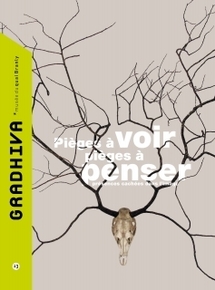
   <title>Pièges à voir, Pièges à penser : Présences cachées dans l'image</title>
   <updated>2011-09-15T14:41:00+02:00</updated>
   <id>https://www.anthropoweb.com/Pieges-a-voir-Pieges-a-penser-Presences-cachees-dans-l-image_a324.html</id>
   <category term="Librairies en Anthropologie et Ethnologie" />
   <published>2011-07-11T18:12:00+02:00</published>
   <author><name>Carlo Severi coord.</name></author>
   <content type="html">
    <![CDATA[
     <div style="position:relative; float:left; padding-right: 1ex;">
      <img src="https://www.anthropoweb.com/photo/art/default/3273821-4689102.jpg?v=1316017032" alt="Pièges à voir, Pièges à penser : Présences cachées dans l'image" title="Pièges à voir, Pièges à penser : Présences cachées dans l'image" />
     </div>
     <div>
      <p style="margin-top: 0px; margin-right: 0px; margin-bottom: 1.5em; margin-left: 0px; padding-top: 0px; padding-right: 0px; padding-bottom: 0px; padding-left: 0px; border-top-style: none; border-right-style: none; border-bottom-style: none; border-left-style: none; border-width: initial; border-color: initial; font: normal normal normal 0.916em/1.5 Verdana, sans-serif; text-align: justify; color: rgb(101, 99, 83); ">  	Ce dossier est consacré à une réflexion, entre anthropologues et historiens de l’art, sur le rôle de l’ambigüité dans la représentation visuelle. Potentielle, double ou chimérique, l’image ambiguë a récemment suscité la réflexion, dans les deux disciplines, en termes nouveaux.&nbsp; Pour en rendre compte, nous avons réuni des recherches menées par des ethnologues et des réflexions autour de l’exposition&nbsp;<em style="margin-top: 0px; margin-right: 0px; margin-bottom: 0px; margin-left: 0px; padding-top: 0px; padding-right: 0px; padding-bottom: 0px; padding-left: 0px; border-top-style: none; border-right-style: none; border-bottom-style: none; border-left-style: none; border-width: initial; border-color: initial; ">Une image peut en cacher une autre,&nbsp;</em>où le thème de l’ambigüité de l’image était appréhendé du point de vue de l’histoire de l’art. <br />  <p style="margin-top: 0px; margin-right: 0px; margin-bottom: 1.5em; margin-left: 0px; padding-top: 0px; padding-right: 0px; padding-bottom: 0px; padding-left: 0px; border-top-style: none; border-right-style: none; border-bottom-style: none; border-left-style: none; border-width: initial; border-color: initial; font: normal normal normal 0.916em/1.5 Verdana, sans-serif; text-align: justify; color: rgb(101, 99, 83); ">  	En dialogue avec des historiens de l’art, des ethnologues interrogent, à partir d’autres horizons, la notion de chimère. Selon les différentes cultures, entre invisible et donné à voir, cette notion peut se décliner d’une autre manière que dans la tradition occidentale, se radicaliser, ou se démultiplier sur d’autres registres que la seule vision. <br />  <p style="margin-top: 0px; margin-right: 0px; margin-bottom: 1.5em; margin-left: 0px; padding-top: 0px; padding-right: 0px; padding-bottom: 0px; padding-left: 0px; border-top-style: none; border-right-style: none; border-bottom-style: none; border-left-style: none; border-width: initial; border-color: initial; font: normal normal normal 0.916em/1.5 Verdana, sans-serif; text-align: justify; color: rgb(101, 99, 83); ">  	C’est cette complexité de l’image ambigüe, et l’espace de recherche que cette complexité ouvre en anthropologie et en histoire de l’art, dont ce dossier de&nbsp;<em style="margin-top: 0px; margin-right: 0px; margin-bottom: 0px; margin-left: 0px; padding-top: 0px; padding-right: 0px; padding-bottom: 0px; padding-left: 0px; border-top-style: none; border-right-style: none; border-bottom-style: none; border-left-style: none; border-width: initial; border-color: initial; ">Gradhiva</em>&nbsp;vise à témoigner. <br />  
     </div>
     <br style="clear:both;"/>
     <div>
      <ul>  	<li class="list">  		<strong>Ecouter<a class="link" href="http://www.anthropoweb.com/Interview-de-Carlo-Severi-a-propos-de-l-ouvrage-Pieges-a-voir-Pieges-a-penser_a323.html" target="_blank"> l'interview de Carlo Severi réalisé par Sophie Haberbüsch</a>  à propos de <em>Pièges à voir, Pièges à penser</em></strong></li>  </ul>  
     </div>
     <br style="clear:both;"/>
    ]]>
   </content>
   <link rel="alternate" href="https://www.anthropoweb.com/Pieges-a-voir-Pieges-a-penser-Presences-cachees-dans-l-image_a324.html" />
  </entry>
</feed>
